

Casino loyalty programs can look simple from the player side: swipe a card, earn points, unlock rewards.
Behind the scenes, they are much more sophisticated.
A casino loyalty program is a system casinos use to track player activity, reward repeat visits, recognize high-value guests, and create incentives for players to return. Most programs use a combination of points, tier status, comps, personalized offers, and promotional rewards.
For casino marketers, loyalty programs are also one of the most important sources of first-party player data. They connect gaming behavior to marketing, promotions, email, and long-term player value.
If you are new to the broader topic, start with Casino Marketing 101 for the foundation. This guide focuses specifically on how casino loyalty programs work and how casinos use them to drive retention.
TL;DR: What Is a Casino Loyalty Program?
A casino loyalty program rewards players for qualifying gaming and spending activity. Players typically earn points, move through loyalty tiers, receive comps, and unlock increasingly valuable benefits based on their activity and value to the casino.
The three core pieces are:
- Points: rewards earned through qualifying activity
- Tiers: status levels based on accumulated qualifying activity
- Comps: benefits such as free play, dining, rooms, entertainment, or other incentives
The best casino loyalty programs do more than hand out rewards. They help casinos understand player behavior, improve segmentation, increase trip frequency, and build stronger long-term relationships.
What Is a Casino Loyalty Program?
A casino loyalty program is a structured rewards system designed to recognize and retain players.
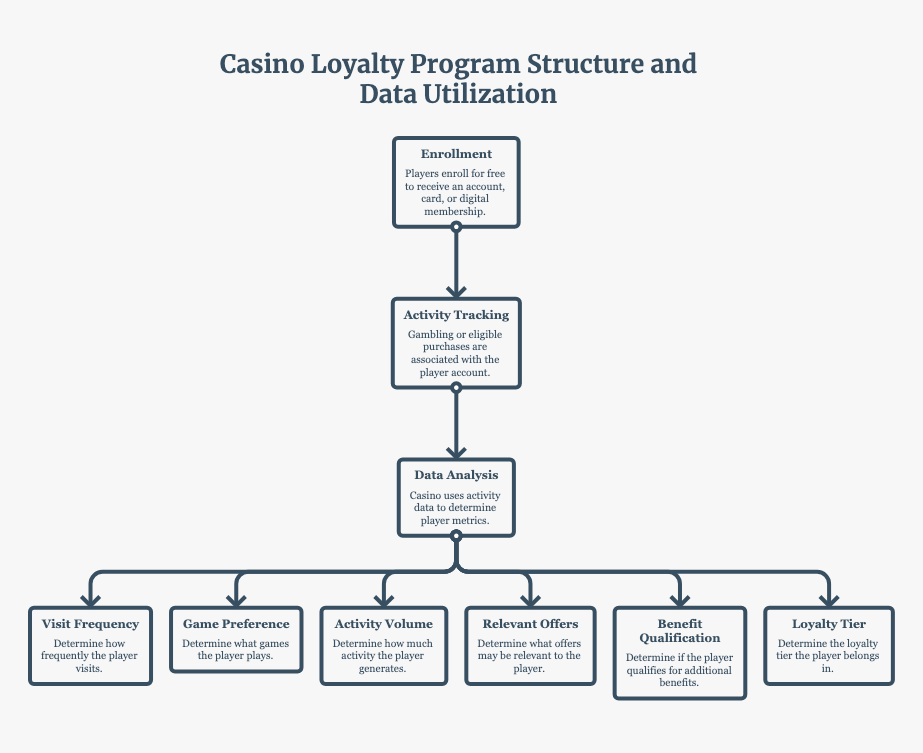
Players typically enroll for free and receive a loyalty account, card, or digital membership. When they gamble or make eligible purchases, their activity can be associated with that account.
The casino can then use that data to determine:
- how frequently the player visits
- what they play
- how much activity they generate
- what offers may be relevant
- whether they qualify for additional benefits
- what loyalty tier they belong in
This is one reason loyalty programs sit at the center of modern casino marketing strategy.
They turn anonymous visits into identifiable player relationships.
How Do Casino Loyalty Programs Work?
Most programs follow the same general pattern:
- A player joins the loyalty program.
- The player uses their card or account while gaming.
- Qualifying activity earns points or tier credits.
- The casino calculates player value using its internal rules.
- Players receive rewards, offers, or comps.
- Higher levels of activity may unlock higher tiers.
- The casino uses player data to personalize future marketing.
The exact formulas vary dramatically by operator.
That matters because two players can spend similar amounts of time in a casino but generate very different expected value depending on the games they play.
That is where casino metrics like THEO, or theoretical win, become important.
What Are Casino Loyalty Points?
Casino loyalty points are rewards players earn through qualifying activity.
Depending on the casino, points may be earned through:
- slot play
- table games
- sportsbook activity
- hotel spending
- restaurants
- entertainment
- retail purchases
- other resort spending
Points can sometimes be redeemed for:
- free play
- food
- hotel stays
- merchandise
- entertainment
- promotional entries
But points are not always the same thing as tier credits.
That distinction is important.
A casino may give players reward points that can be spent while simultaneously tracking tier credits that determine status.
What Are Casino Loyalty Tiers?
Tiers are status levels within a casino loyalty program.
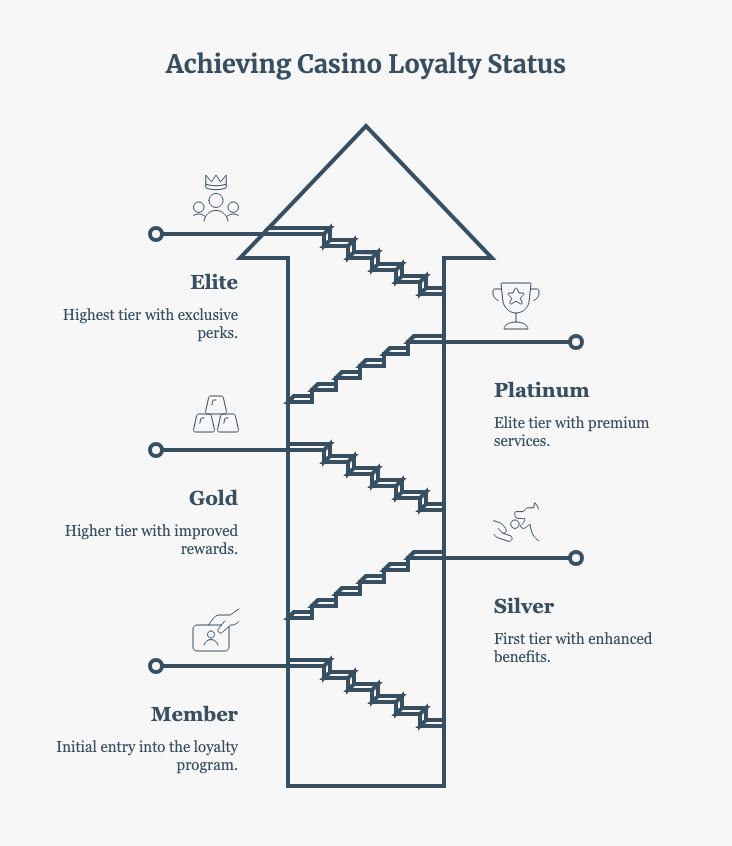
A simple program might include levels such as:
Member → Silver → Gold → Platinum → Elite
The actual names do not matter.
The purpose is to give players something to progress toward.
As players move into higher tiers, they may receive better benefits such as:
- faster point earning
- better free play offers
- priority service
- exclusive events
- complimentary hotel stays
- dining credits
- VIP lounges
- dedicated casino hosts
- premium promotions
Tier systems create another psychological incentive for repeat visits: players are not just earning rewards; they are building status.
For marketers, tier status also becomes an extremely useful segmentation signal.
Instead of sending the same message to everyone, casinos can create different campaigns for casual players, mid-tier guests, high-value players, and VIPs.
That is exactly why casino email marketing strategies should be connected to loyalty data rather than treated as generic promotional blasts.
What Are Casino Comps?
Comps are complimentary benefits provided to players based on their activity and value.
Common casino comps include:
- free play
- hotel rooms
- meals
- drinks
- entertainment tickets
- resort credits
- transportation
- VIP experiences
A comp is not necessarily the same thing as a loyalty point.
Points are usually earned through an established formula.
Comps may be generated based on a broader assessment of player value and reinvestment.
That is where metrics like THEO and average daily theoretical, often called ADT, become especially important.
How THEO Influences Casino Loyalty Rewards
Casinos do not only look at how much money a player wins or loses during one visit.
They often look at the amount the casino would theoretically expect to earn from that player's activity over time.
That is THEO.
A simplified calculation might look like:
THEO = Amount Wagered × Expected House Advantage
That gives the casino a more stable measure of expected value than a player's actual results during one lucky or unlucky trip.
If you want the deeper explanation, read What Is THEO in Casino Marketing?.
THEO can influence:
- comp decisions
- loyalty offers
- free play
- hotel benefits
- event invitations
- host attention
- player segmentation
The goal is to reward players without reinvesting more than their expected value can economically support.
What Is Casino Reinvestment?
Reinvestment is the value a casino gives back to players in the form of offers, comps, promotions, or rewards.
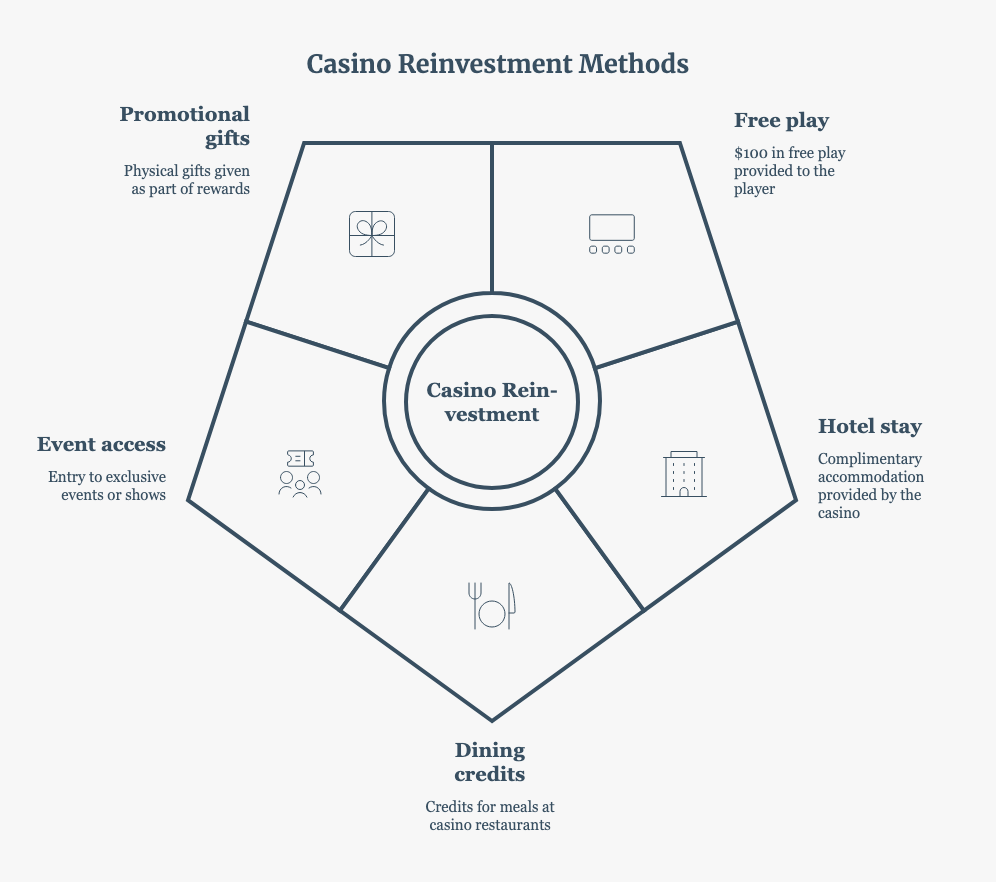
For example, if a player represents $1,000 in expected theoretical value, the casino may decide that some percentage of that value can be reinvested into maintaining the relationship.
That reinvestment might come through:
- $100 in free play
- a hotel stay
- dining credits
- event access
- promotional gifts
The exact formula depends on the casino.
The important concept is that strong casino loyalty programs balance generosity with profitability.
Reward too little and players may stop returning.
Reward too much and the casino can destroy the economics of the relationship.
Loyalty Programs Help Casinos Segment Players
One of the biggest advantages of a loyalty program is better segmentation.
Instead of looking at the entire database as one audience, casinos can group players based on:
- tier
- THEO
- visit frequency
- game preference
- location
- recency
- offer redemption
- event attendance
- loyalty activity
That segmentation makes casino email marketing campaigns much more relevant.
A high-value blackjack player should not necessarily receive the same offer as an occasional slot player.
A player who visited three times this month may need a different message than someone who has been inactive for 90 days.
Loyalty Programs and Casino Promotions Work Together
Casino promotions become much more effective when they are built on loyalty data.
Instead of offering the exact same promotion to every player, casinos can use loyalty data to decide:
- who should receive the offer
- how valuable the offer should be
- which channel should deliver it
- when it should be sent
- what action should trigger the next message
That can improve everything from tournaments to bounce-back offers.
Our guide to casino promotion ideas covers specific ways casinos can turn loyalty data into promotions that drive additional visits and engagement.
How Casino Loyalty Programs Improve Player Retention
The fundamental goal of a loyalty program is not points.
It is retention.
A strong program gives players a reason to continue choosing one casino over another.
That loyalty can be strengthened through:
- personalized rewards
- recognition
- tier progression
- exclusive offers
- relevant communication
- memorable experiences
This is particularly important for regional and tribal operators, where the same customer may have multiple casinos competing for their visits.
That is why tribal casino email marketing strategies often focus heavily on strengthening the relationship rather than simply increasing promotional volume.
Casino Loyalty Programs Also Help With Player Acquisition
Loyalty starts after acquisition, but the two are closely connected.
The economics of acquiring a new player make much more sense if the casino has a system for turning that first visit into a long-term relationship.
A player acquisition campaign that generates thousands of first-time guests but very few repeat visits may not be as valuable as it first appears.
That is why casino player acquisition best practices should include what happens after the player is acquired.
The acquisition funnel should not stop at signup.
It should continue into loyalty.
Email Is One of the Engines Behind Casino Loyalty
Loyalty programs generate data.
Email helps turn that data into communication.
Casino email programs can use loyalty information to trigger or personalize:
- welcome emails
- tier-status updates
- promotional offers
- birthday rewards
- event invitations
- free play
- reactivation campaigns
- VIP communication
- expiring reward reminders
That is why email should be treated as part of the loyalty infrastructure, not merely as a channel for sending promotions.
Our guide to the three types of emails every casino needs explains how different campaign types can support the player lifecycle.
You can also see the broader opportunity in maximizing email marketing for casinos and the gambling industry.
AI Is Making Casino Loyalty Programs More Personalized
Traditional loyalty programs rely heavily on predefined segments.
AI and predictive modeling can take personalization further.
Instead of asking only:
Which tier is this player in?
Casinos can increasingly ask:
- Is this player likely to churn?
- What offer are they most likely to redeem?
- Which game category interests them?
- When are they most likely to return?
- What incentive is actually necessary?
That is the direction explored in the future of casino email with AI personalization and predictive offers.
The goal is not simply to give players more.
It is to give them something more relevant.
Common Casino Loyalty Program Mistakes
Rewarding Every Player the Same Way
Different players have different values, interests, and behaviors.
Generic loyalty programs lose much of the advantage of having player data in the first place.
Over-Relying on Discounts and Free Play
Rewards matter, but loyalty should not become a race to give away the most value.
Experiences, recognition, access, and relevance can also increase loyalty.
Failing to Connect Loyalty Data to Marketing
Having sophisticated loyalty data means little if the marketing team cannot actually use it.
That is why casino marketers need technology that connects player information with communication and campaign execution.
Sending Too Many Generic Promotions
A large database should not automatically mean a larger blast.
Using loyalty data to improve relevance is a much stronger strategy.
Treating Loyalty as a Separate Department
Loyalty should connect with acquisition, promotions, events, CRM, email, and broader casino marketing tactics.
The best programs work across the entire player experience.
What Makes a Good Casino Loyalty Program?
The best casino loyalty programs tend to have several things in common.
They are easy for players to understand.
They offer benefits people actually want.
They create achievable progression.
They use player value intelligently.
They personalize communication.
And they connect the rewards program to the broader casino experience.
Behind the scenes, they also give casino marketing teams the ability to turn loyalty data into meaningful campaigns.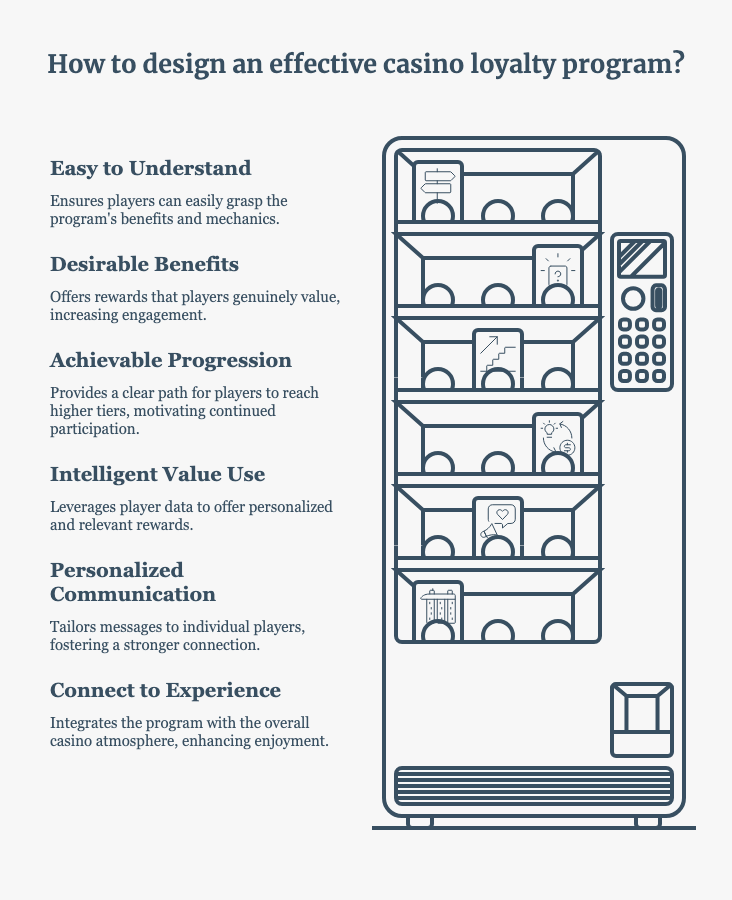
That is where platforms built for casino marketing matter. iPost's casino email solutions are designed to help casino teams use data, segmentation, automation, and campaign execution to communicate with players more intelligently.
Why Casino Loyalty Programs Matter to Marketing Teams
For marketers, a casino loyalty program is much more than a rewards card.
It is one of the richest sources of first-party customer information a casino has.
That information can power:
- audience segmentation
- promotional targeting
- personalized email
- reactivation
- events
- acquisition measurement
- VIP marketing
- retention programs
It can also help casino marketers coordinate communication with the broader brand and reputation strategy described in casino public relations and email marketing strategy.
That makes loyalty one of the most important bridges between player data and actual marketing execution.
Final Thoughts
So, what is a casino loyalty program?
It is a system designed to identify players, measure qualifying activity, reward valuable behavior, and give people a reason to keep coming back.
Points make rewards tangible.
Tiers create progression and status.
Comps reinvest value into the player relationship.
And the data behind all three gives casino marketers the ability to build increasingly relevant campaigns.
The most sophisticated casino loyalty programs go beyond handing out points. They connect loyalty, segmentation, promotions, email, and player value into one coordinated retention strategy.
That is ultimately where loyalty becomes much more than a rewards program.
It becomes a growth engine.
FAQ: Casino Loyalty Programs
What is a casino loyalty program?
A casino loyalty program is a rewards system that tracks qualifying player activity and provides benefits such as points, free play, comps, tier status, event access, hotel stays, and other incentives.
How do casino loyalty points work?
Players typically earn casino loyalty points through qualifying gaming or spending activity. Depending on the program, those points may be redeemable for free play, dining, hotel stays, merchandise, or other rewards.
What are casino loyalty tiers?
Casino loyalty tiers are status levels based on qualifying player activity. Higher tiers typically provide additional benefits such as better rewards, priority service, exclusive events, or VIP perks.
What are casino comps?
Casino comps are complimentary benefits provided to players based on their activity or value. Examples include free play, hotel rooms, meals, entertainment, and resort credits.
What is the difference between casino points and tier credits?
Casino points are often redeemable rewards, while tier credits are typically used to determine the player's loyalty status. Some programs combine the two, while others calculate them separately.
How do casinos determine how many comps a player receives?
Casinos may consider factors including game type, wagering activity, visit frequency, expected theoretical value, and internal reinvestment rules when determining comp value.
Why do casinos have loyalty programs?
Casinos use loyalty programs to encourage repeat visits, recognize valuable players, collect first-party customer data, personalize marketing, and improve long-term retention.
Are casino loyalty programs worth joining?
For frequent players, loyalty programs can provide access to rewards and benefits they would not otherwise receive. The actual value depends on the casino's program structure and the player's activity.